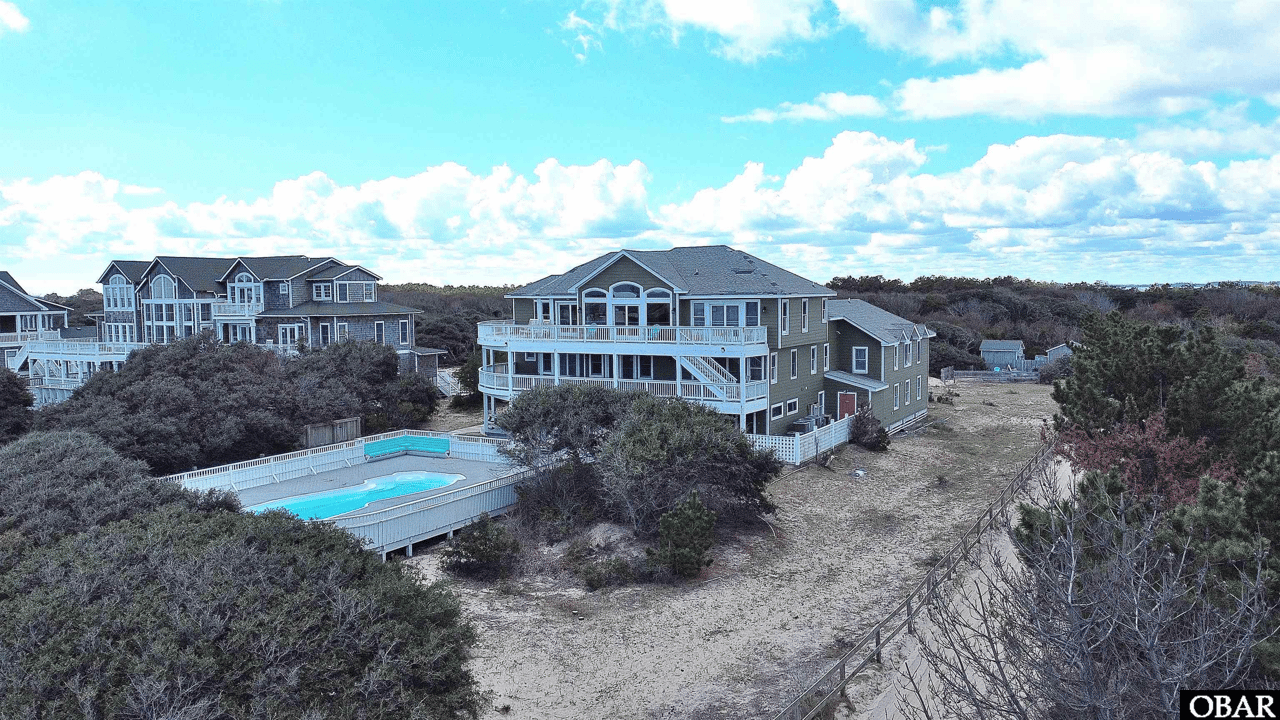
1.
If you’re considering buying an Outer Banks investment property, one of the first questions you’ll probably ask is:
How much rental income can this property actually generate?
The answer isn’t simply the rental projection shown on a listing.
Short-term rental income on the Outer Banks can vary dramatically based on location, proximity to the beach, number of bedrooms, amenities, condition, rental management, owner usage and even how aggressively the property is marketed.
A home generating $150,000 per year isn’t necessarily a better investment than one generating $100,000.
To understand the investment, you need to understand where the revenue comes from — and where the money goes.
Thinking About Buying an Outer Banks Vacation Rental?
Let us help you evaluate the property, rental potential and numbers before you buy.
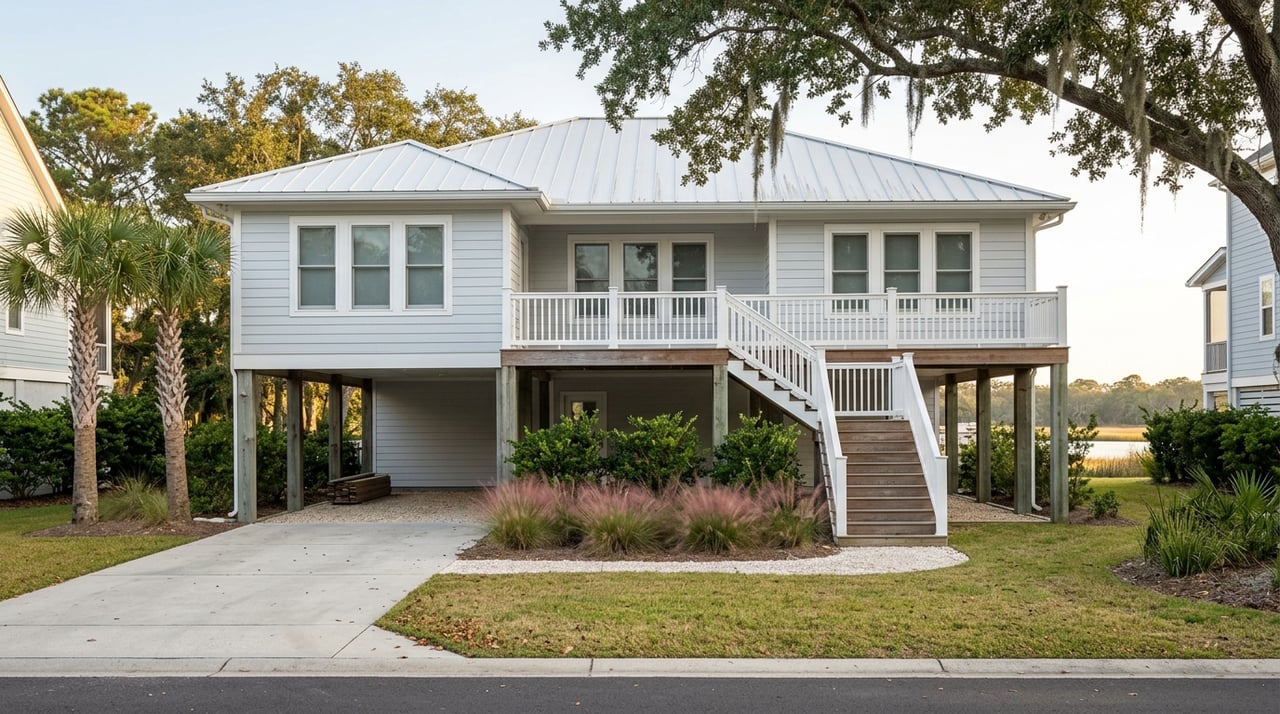
Short-term rental income is the revenue generated when a property is rented for short stays — typically through vacation rental management companies or platforms such as Airbnb and Vrbo.
On the Outer Banks, vacation rentals are a major part of the real estate market.
Many properties generate a significant portion of their annual rental income during the peak summer season, while spring, fall and holiday weeks can provide additional revenue.
But there’s an important distinction:
If an Outer Banks property generates $150,000 in annual gross rental income, that does not mean the owner makes $150,000.
Expenses have to come out of that revenue.
Depending on the property, those expenses can include:
This is why investors should look beyond the headline rental number.
These are two very different numbers.
Actual rental income tells you what the property has historically generated.
We recommend reviewing multiple years of rental history whenever possible.
Ask:
Historical numbers provide valuable information, but they don’t necessarily tell you what the property could generate under new ownership.
A rental projection estimates what a property may generate in the future.
Rental management companies may provide projections based on comparable properties, bedroom count, location, amenities and current market conditions.
Projections can be extremely useful — but they’re still projections.
A sophisticated buyer should understand the assumptions behind the number.
Two homes located a few streets apart can have dramatically different rental performance.
1.
Location can have a major impact on rental demand. Popular Outer Banks vacation rental markets include:
Other areas of the Outer Banks can also provide compelling investment opportunities depending on the property and strategy.
2.
Generally, proximity to the ocean matters.
Oceanfront homes can command premium weekly rental rates, but they also tend to have significantly higher acquisition and ownership costs.
That doesn’t automatically mean oceanfront produces the best return.
Sometimes a property several lots back from the beach can produce an attractive rental return relative to its purchase price.
The highest rental income doesn’t always equal the highest ROI.
3.
Larger Outer Banks vacation homes can accommodate multiple families and larger groups.
That can significantly increase weekly rental rates.
But bigger isn’t automatically better.
A 10-bedroom property also means more furnishings, more bathrooms, larger HVAC systems and potentially higher operating and maintenance costs.
The entire investment needs to be evaluated.
4.
For many Outer Banks vacationers, a private pool is an important amenity.
Properties with pools may have an advantage over comparable homes without one, particularly during warmer rental months.
If a property doesn’t have a pool, investors may want to investigate whether adding one is physically and legally possible.
5.
Vacationers aren’t only comparing locations.
They’re comparing experiences.
Features such as:
can help differentiate a property in a competitive rental market.
There isn’t one number that makes an Outer Banks property a good investment.
Instead, investors should compare the property’s potential revenue against the total cost of ownership and purchase price.
For example:
Purchase Price: $1,500,000
Gross Rental Income: $180,000
Purchase Price: $1,500,000
Gross Rental Income: $180,000
Property A generates more gross rental income.
But Property B generates considerably more rental revenue relative to its purchase price.
That doesn’t automatically make Property B the better investment either — because we still haven’t considered expenses, financing, appreciation potential, condition or future capital improvements.
This is why we analyze properties individually.
One quick way to compare properties is gross rental yield.
The calculation is
Annual Gross Rental Income ÷ Purchase Price × 100
For example:
A property purchased for $1,000,000 generating $120,000 per year in gross rental income would have a gross rental yield of approximately 12%.
This isn’t your actual investment return.
It is simply a quick tool for comparing the rental-generating ability of different properties.
Net rental income gets closer to answering the question investors actually care about:
How much money is left after operating expenses?
For example:
Annual Gross Rental Revenue: $150,000
Operating Expenses: $60,000
Estimated Net Operating Income: $90,000
Your actual numbers will depend heavily on the property and which expenses are included.
Mortgage principal and interest are generally analyzed separately when evaluating property-level net operating income.
Cap rate — or capitalization rate — is another metric investors use to evaluate real estate.
A simplified calculation is:
Net Operating Income ÷ Purchase Price = Cap Rate
For example:
Purchase Price: $1,500,000
Net Operating Income: $90,000
Estimated Cap Rate: 6%
But cap rate shouldn’t be viewed in isolation when analyzing an Outer Banks vacation rental.
Many OBX buyers are considering several benefits simultaneously:
Rental Income + Personal Use + Potential Appreciation + Tax Strategy + Long-Term Equity
That’s very different from evaluating a traditional apartment building.
This is one of the most overlooked parts of analyzing vacation rental history.
Suppose a property generated $120,000 last year.
But the owner used the property personally for four prime summer weeks.
That historical revenue might significantly understate the property’s potential rental income.
The opposite can also happen.
A property may show impressive rental numbers because virtually every desirable week was rented.
If you plan to use the house personally for several prime weeks each year, your future income could be lower.
Your rental strategy needs to reflect how you actually intend to use the property.
Potentially — and this is where some of the most interesting Outer Banks investment opportunities can emerge.
A property may be underperforming because it has:
If the location and underlying property are strong, renovations may create an opportunity to reposition the home and potentially increase rental demand.
Instead of asking only:
“How much does this house rent for?”
We also like to ask:
“How much could this house rent for?”
Depending on the financing program, potentially.
Certain investment property loan programs may allow borrowers to qualify based in part on the property’s rental income rather than relying exclusively on traditional personal income calculations.
This can be especially useful for real estate investors and self-employed buyers.
Loan requirements, rates, down payments and qualification standards vary by lender and borrower.
LEARN ABOUT OUTER BANKS INVESTMENT PROPERTY FINANCING
Buying an Outer Banks vacation rental shouldn’t start and end with scrolling through listings.
At Luxury Realty Outer Banks, we help buyers identify properties based on their specific investment goals.
That may mean finding:
The highest grossing property.
Or it may mean finding:
The strongest potential return for the purchase price.
Or perhaps you’re looking for:
A luxury beach house that generates substantial rental income while still giving your family a place to enjoy the Outer Banks.
Those are three very different searches.
We’ll help you determine which one fits you.
Tell us your:
and we’ll help you identify properties that deserve a closer look.
Luxury Realty Outer Banks
Rental projections and examples are estimates for educational purposes and are not guarantees of future rental income, investment performance, appreciation, tax treatment or loan approval. Buyers should independently verify financial information and consult appropriate financial, tax, insurance and lending professionals.