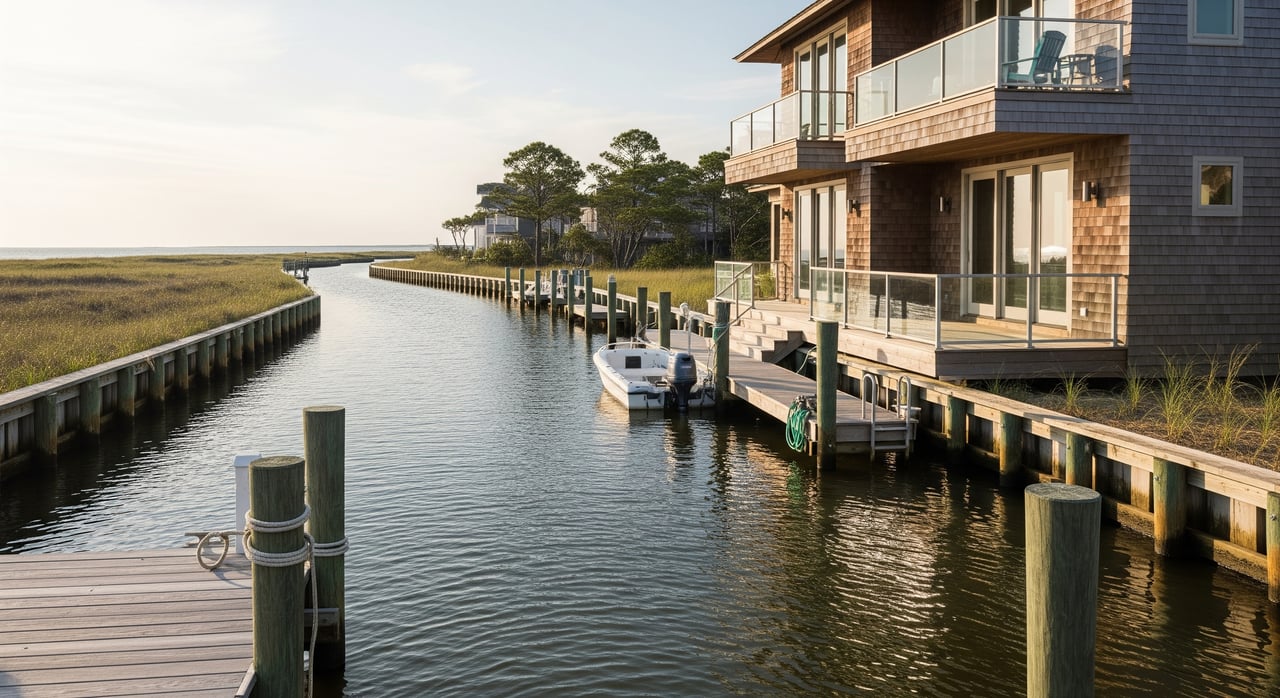
Is your dream Outer Banks home right on the open sound or tucked along a quiet canal? If you are looking in Kill Devil Hills, both options offer water access and a coastal lifestyle, but they feel very different day to day. It helps to match what you value most with the right shoreline. In this guide, you will compare views, boating access, flood and insurance factors, permits for docks, ownership costs, and rental potential so you can buy with confidence. Let’s dive in.
Soundfront vs canalfront at a glance
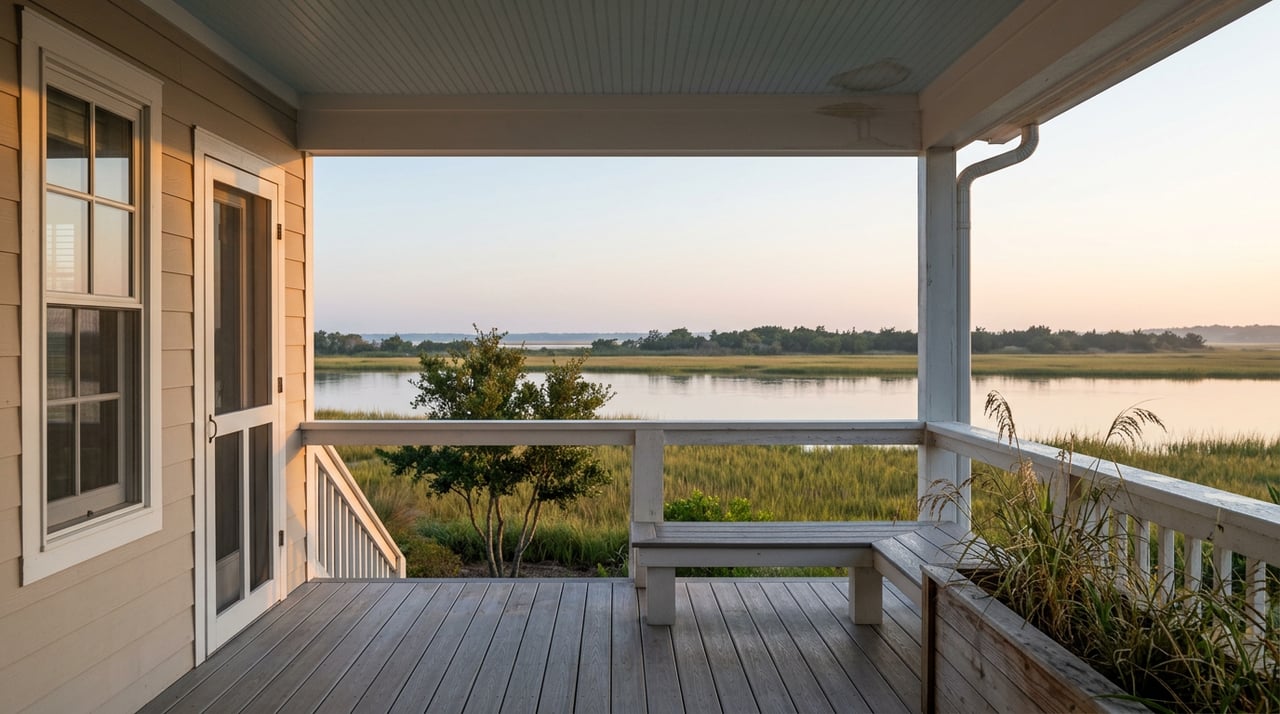
Soundfront properties sit on the open estuarine waters to the west side of the island. You usually get broad water vistas, dramatic sunsets, and more direct routes to deeper water. Lots can be larger with fewer immediate visual obstructions.
Canalfront properties back onto man-made or smaller natural channels that connect to the sound. You may trade panoramic views for a sheltered setting and easy launching for kayaks and smaller boats. Neighbors and docks are closer, and boat size can be limited by canal width and depth.
Views and privacy
- Soundfront: Wider, open-water views and sweeping skies. Where lots are larger, you often feel a greater sense of space. You may also see more passing boats in certain locations.
- Canalfront: Cozier, “neighborhood” water views with adjacent docks in sight. It can feel private from the street yet active along the canal.
Boating and access
- Soundfront: More direct access to open water, which is useful for larger boats and longer cruises. Depths still vary by site, so verify channel routes and mean low water where you plan to dock.
- Canalfront: Protected mooring and easy launching for kayaks, paddleboards, and smaller center consoles. Check for fixed bridges, tight turns, shallow spots, or seasonal restrictions that could limit length overall or mast height.
Wind, noise, and wildlife
- Soundfront: More exposure to wind and wave action, which can add sound and spray during weather. These shorelines often attract more waterfowl and marine life.
- Canalfront: More sheltered from wind and waves. Still-water pockets can attract insects and aquatic vegetation at times.
Docking, permits, and riparian rights
Waterfront living often centers on your dock. Before you buy, map out what exists, what is permitted, and what is possible.
Dock types and maintenance
Common options include fixed piers with pilings, floating docks, and boat lifts. Bulkheads and riprap protect shorelines where allowed. Saltwater exposure accelerates wear, so plan for periodic inspection and repair of pilings, decking, fasteners, lift motors, and electrical.
Storms can stress structures. Properly installed pilings tend to fare better in heavy weather, while floating docks may detach but can be easier to replace. Always evaluate bulkheads for erosion or undermining.
Permits and riparian rights
Docks, bulkheads, and shoreline changes typically require authorization through North Carolina’s Coastal Area Management Act (CAMA). Some projects also need U.S. Army Corps of Engineers approval if they affect navigable waters. Local Dare County permits and HOA rules can apply as well. Waterfront owners usually have riparian rights for reasonable water access and use, but these rights are subject to state law and permitting. Confirm recorded permits, as-built plans, and legal access during due diligence.
Flood zones, elevation, and insurance
Many soundfront and canalfront parcels in Kill Devil Hills fall within FEMA Special Flood Hazard Areas. V zones carry higher construction standards and can affect premiums more than AE zones. Lenders often require an elevation certificate to set National Flood Insurance Program premiums and confirm base flood compliance.
Soundfront homes may see higher wind and wave forces due to exposure. That can influence both wind and flood insurance costs and deductibles. Always get property-specific quotes early in your process and understand how elevation, flood zone, and construction type impact premiums.
Market pricing and ownership costs
What typically costs more
Soundfront homes often command a premium because of panoramic views, larger lots in some areas, and more direct deep-water access. That premium varies by neighborhood, lot size, elevation, dock quality, and proximity to town amenities. In tight markets or peak seasons, price differences can widen or narrow based on recent sales and rental demand.
Recurring costs to budget
- Dock and lift maintenance, plus bulkhead or riprap repairs
- Flood and wind insurance, with deductibles tailored for hurricanes and storms
- Property taxes that reflect waterfront valuation
- HOA or canal-maintenance fees if your neighborhood manages dredging or shared waterways
Well-documented dock permits, quality construction, and reliable water depth at the slip can support resale value. Higher maintenance and insurance may deter some buyers, but boaters often pay more for dependable access and durable infrastructure.
Rentals and investment potential
Many Outer Banks homes can generate vacation rental income. Soundfront properties often achieve higher nightly rates due to views and sunsets. Canalfront homes can also perform well if they offer dependable dockage and attractive interiors. Before underwriting any income, check neighborhood and municipal rules, transient occupancy taxes, and any HOA rental restrictions.
Buyer due-diligence checklist
Use this field-tested list to get clarity before you write an offer.
Map and legal
- Confirm whether the parcel is truly soundfront or canalfront using county parcel maps and aerial imagery, combined with nautical charts.
- Order a shoreline survey to confirm property lines, mean high-water line, and any easements.
- Review title for riparian rights, recorded dock permits, and encumbrances.
Dock and navigation
- Measure depth at mean low water at the intended slip and along the path to open sound.
- Confirm turning radius, canal width, and any fixed bridges or overhead wires that limit clearance.
- Inspect pilings, decking, connectors, utilities, and boat lift operation.
- Request as-built dock plans and copies of permits or variances.
Structure and site
- Obtain the elevation certificate and verify FEMA flood zone and base flood elevations.
- Inspect foundations, pilings, seawalls, and bulkheads for movement or erosion.
- Check site drainage, vegetation, and signs of scour along the shoreline.
Permits and rules
- Ask for copies of any CAMA or U.S. Army Corps permits for docks or shoreline work and confirm status.
- Check with Dare County and any HOA for rules on dock replacement, boat storage, setbacks, and allowed structures.
Financials
- Get flood and wind insurance quotes for the specific elevation and construction type.
- Review maintenance records and expected replacement timelines for docks and lifts.
- Verify any canal dredging plans, special assessments, or neighborhood fees.
Map layers to verify before you buy
A little desktop research goes a long way. Layer parcel boundaries on aerial imagery to confirm the exact shoreline and how neighboring docks are positioned. Review nautical charts for channels and depth, and compare to local knowledge about shoaling. Check FEMA flood maps for the property’s flood zone and base flood elevations. Where available, review coastal management layers that identify critical areas and buffered shorelines, which can affect future permits.
Helpful visuals to create as you compare options:
- Side-by-side aerials of a soundfront parcel and a canalfront parcel to show frontage width, dock layout, and adjacent uses.
- A navigation route sketch from a canal lot to the nearest channel, noting any bottlenecks like shallow bends or low bridges.
- A flood overlay that shows the home’s footprint, flood zone, and approximate highest and lowest points on the lot.
- A dock detail inset with notes on dock type and measured depth at mean low water.
Which is right for you?
Choose soundfront if you want sweeping views, sunsets over open water, and more direct access for larger boats. Pick canalfront if you prefer a sheltered setting, easy paddle launches, and a neighborhood vibe with your own dock. In both cases, you will want clear answers on water depth, permits, flood elevation, and ongoing costs before you commit.
If you would like exact dock depths, permit status, and a guided on-water look at soundfront and canalfront options in Kill Devil Hills, we can help coordinate tours, connect you with marine contractors, and model rental and ownership costs. For streamlined financing, you can also explore pre-approval through an integrated local mortgage channel.
Ready to compare properties side by side and make a confident choice? Reach out to Jessica Evans to schedule a consultation.
FAQs
What is the main difference between soundfront and canalfront homes in Kill Devil Hills?
- Soundfront homes face open estuarine water with broad views and typically more direct deep-water access, while canalfront homes sit on narrower channels that connect to the sound and offer a more sheltered setting.
Which locations are better for larger boats on the Outer Banks sound side?
- Soundfront properties are generally better for larger boats due to more direct routes and deeper water, but you should still verify depth, turning room, and any bridge clearances along your exact route.
Do I need permits to build or modify a dock in Dare County?
- Most docks, lifts, bulkheads, and shoreline changes require CAMA permits, and some projects also need U.S. Army Corps authorization. Local county and HOA rules can apply too.
How do flood zones affect waterfront homes in Kill Devil Hills?
- Many waterfront parcels are in FEMA flood zones. Your flood zone and elevation will influence construction requirements and insurance premiums, so obtain an elevation certificate and property-specific quotes.
What recurring costs should I expect with a waterfront property?
- Budget for dock and lift maintenance, bulkhead or riprap repairs, flood and wind insurance, property taxes, and any HOA or canal-maintenance fees.
Can canalfront homes perform well as vacation rentals?
- Yes, if they offer reliable dock access and strong interior amenities. Soundfront homes often achieve higher nightly rates due to views, but success varies by property and neighborhood rules.
What should I check during a waterfront home inspection?
- Confirm water depth at mean low water, navigation route, dock condition, permits, elevation certificate, flood zone, shoreline stabilization, and any HOA or county rules affecting docks or boat storage.